🇮🇳 Republic Day: The Freedom That Must Be Lived
(Based on the live discourse of Param Dwij)
(परम द्विज के प्रवचन पर आधारित)
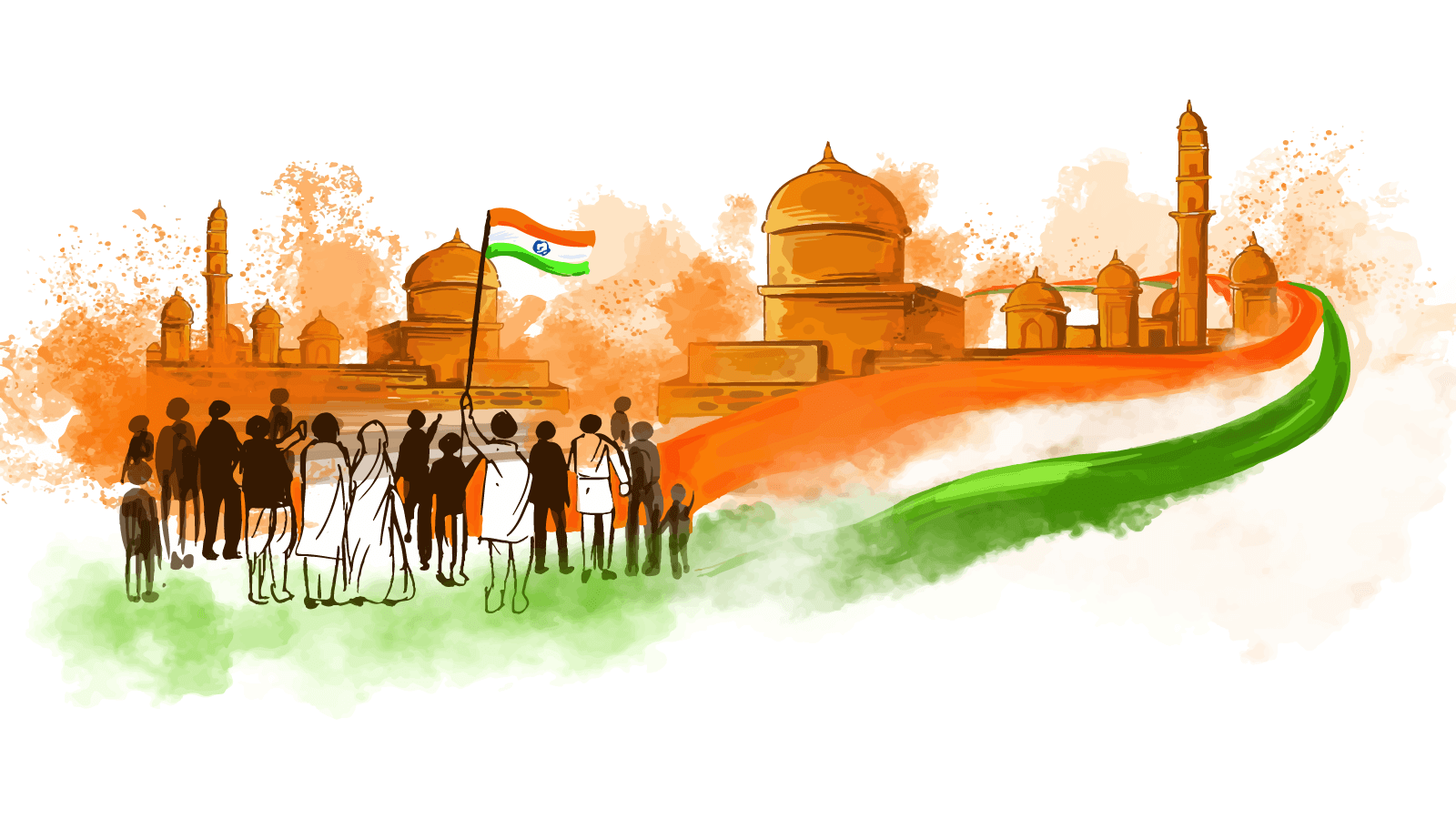
Republic Day does not arrive as a casual date on a calendar. It comes as a reminder. It asks a nation to pause and remember what it promised to itself—not through emotion alone, but through structure, principle, and conscience. While Independence Day often carries the energy of liberation, Republic Day carries something quieter and heavier: responsibility. Independence was a breaking of chains. A republic is the work of living without them.
Each year, we watch the flag rise, we listen to the speeches, we absorb the pride in the air, and for a few hours, the nation feels unified in spirit. Yet when the day passes, what remains is the more important question: what did we actually remember? Did we remember only the symbolism, or did we remember the demand that symbolism carries? Because a republic is not sustained by celebration. Standards sustain it.
The word “Republic” is not only political. It is ethical. It is the decision to place a nation under the guardianship of values rather than personalities. It is the agreement that power should be guided by principles and restrained by law. It is also the willingness of citizens to participate in that restraint—not as passive observers, but as living custodians of a shared moral order.
In that sense, Republic Day is not merely an event. It is an inner test.
A nation can have the finest constitution and still collapse inwardly if its citizens become careless with the truth. A country can have institutions and still rot socially if conscience disappears. The real foundation of a republic is not only law. It is the maturity of its people. The laws establish boundaries. The people decide whether those boundaries mean anything. And that decision is made daily, in ways far more ordinary than we like to admit.
A republic survives not only through elections, policies, and governance, but through the invisible conduct of millions of individuals in how they speak, how they disagree. How do they treat people who hold less power? How they behave when no one is watching. How easily they compromise integrity for convenience. How quickly they trade long-term dignity for short-term benefit.
This is why, for me, Republic Day is not just about public pride. It is about personal responsibility. It is the moment when I ask myself: what kind of citizen am I becoming?
We speak about freedom as though it is only external—freedom from colonial rule, freedom from oppression, freedom from injustice, freedom from hardship. These freedoms matter. They are real. They shape whether people can breathe without fear. But I have also come to see that outer freedom does not automatically create inner freedom. Many people live in a free nation while remaining imprisoned inwardly.
Imprisoned by anger that has become identity.
Imprisoned by fear that disguises itself as caution.
Imprisoned by resentment that seems justified but slowly corrodes the mind.
Imprisoned by hatred that masquerades as loyalty.
Imprisoned by the need to dominate conversations instead of understanding them.
A nation can never remain free for long if its people lose inner freedom. Not because inner freedom is a luxury, but because inner bondage produces social collapse. A mind ruled by hatred cannot build a stable society. A citizen addicted to outrage cannot preserve justice. A culture that celebrates cruelty will eventually turn that cruelty inward.
So Republic Day is not only a patriotic celebration. It is a reminder of what freedom demands from the inner life.
At the centre of Republic Day stands the Constitution. Most people think of the Constitution as a legal document—complex, formal, and meant for courts. But beyond law, the Constitution carries a deeper spirit. Its ideals are not meant to remain in books. They were meant to live inside people.
Justice. Liberty. Equality. Fraternity.
These are not decorative words. They are commitments. They are choices that must be renewed again and again, especially when emotions rise. It is easy to speak of justice when one has not been wronged. It is harder to practice justice when anger demands revenge. It is easy to talk about equality when one’s privileges are not threatened. It is harder to practice equality when the ego wants superiority. It is easy to speak of liberty when it protects one’s own voice. It is harder to protect liberty when it allows voices we dislike.
A republic is not tested when everything is calm. It is tested precisely when tension arrives.
This is why patriotism must be carefully understood. Too often, patriotism becomes noise. It becomes aggression. It becomes the refusal to question. It becomes identity worn like armour. But true patriotism is not blind loyalty. It is love guided by conscience.
I do not need to prove love for my nation by hating its people.
I do not need to prove pride by rejecting empathy.
I do not need to defend the country by destroying its values.
If my patriotism makes me cruel, I have misunderstood it. If my patriotism makes me arrogant, I have misused it. If my patriotism makes me numb to suffering, I have betrayed it. Love does not cancel compassion. It deepens it.
A republic is not strengthened by citizens who shout the loudest. It is strengthened by citizens who mature inwardly. Those who develop patience instead of reflexive aggression. Those who practice restraint instead of impulsive rage. Those who value truth even when lies seem more beneficial. Those who understand that disagreement is not a threat and that diversity is not an insult.
The strength of a nation is not measured only in economic growth or military display. It is measured in the moral stamina of its people. It is measured in the quality of everyday ethics. It is measured by how the powerful treat the powerless, how the majority treats the minority, and how individuals behave when they think no one is watching.
This is where Living Dwij comes into the conversation—not as a second voice, but as my own work in the world. Living Dwij exists so that awareness is not confined to private spirituality, and ethics is not reduced to public morality. It is an attempt to bring inner clarity into daily conduct, so the person does not live in contradiction. Because contradiction is how societies collapse: when people publicly demand high values and privately practice low ones.
When I speak of consciousness, I am not speaking of escape. I am speaking of responsibility. A conscious person does not hide from the world. A conscious person participates with integrity.
Republic Day reminds me that citizenship is not a label. It is behaviour. It is not merely being born into a nation; it is the daily choice to protect what makes that nation worth belonging to. The republic is not “them”—not just the government, not just the leaders, not just the system. The republic is the collective character of the people. Every time we normalise dishonesty, we weaken it. Every time we excuse injustice, we weaken it. Every time we reduce human beings to enemies, we weaken ourselves.
And every time we choose integrity, we strengthen it.
This is why I believe Republic Day must be treated as more than a holiday. It is the nation’s moment of remembrance—an annual pause that asks: are we still loyal to the principles we claim to uphold? Have we merely inherited freedom, or are we still worthy of it?
Freedom is not something we receive once and keep forever. It is something we maintain by maturity. It survives only when citizens develop inner discipline—not the discipline of control, but the discipline of conscience.
For me, Republic Day is not a performance. It is a mirror.
It asks me to look at my conduct, not my slogans. It asks me to examine my ethics, not my opinions. It asks me to become the kind of citizen who does not demand perfection from the nation while practising compromise within himself. Because if I cannot protect integrity in my own life, I cannot expect integrity at a national level.
A republic, at its best, is a moral agreement carried through time. It survives only when people live it.
So today, I do not celebrate only with pride. I celebrate with responsibility. I honour the Constitution not merely with words, but with the willingness to embody its spirit. I remember that justice, liberty, equality, and fraternity are not national decorations—they are human duties.
And if I must ask one question on Republic Day, it is this: am I living in a way that strengthens the republic, or am I merely enjoying the benefits of its existence?
A nation can only remain free if its people remain awake.
— Param Dwij