
Steadfastness in Action, Devotion, and Knowledge: Three yogic paths to liberation in Hinduism
(Based on the live discourse of Param Dwij)
(परम द्विज के प्रवचन पर आधारित)
Steadfastness in Action
The Brihadaranyaka Upanishad, dating back to around 500 BCE, is one of the earliest known sources that laid the philosophical groundwork for Karma Yoga—the path of action. This concept was later elaborated in the Bhagavad Gita, where Lord Krishna speaks extensively about Karma Yoga as a form of spiritual practice. According to Krishna, one should engage in action selflessly without holding any attachment to the fruits of one’s labour. When performed with dedication and a joyful heart, such action becomes worship—a means to purify the mind and uplift society.
Karma Yoga is not limited to a single scripture. In Section 11.20 of the Bhagavata Purana it is mentioned alongside Jnana Yoga (the path of knowledge) and Bhakti Yoga (the path of devotion) as one of the three primary routes to spiritual liberation. These three paths overlap each other but differ in the emphasis they make: those who are intellectuals gravitate towards Jnana, active individuals towards Karma, and emotionally inclined seekers towards Bhakti. Chapter 33 of the Narada Purana also provides discussions on Karma Yoga, reinforcing its significance in Hindu spiritual practice.
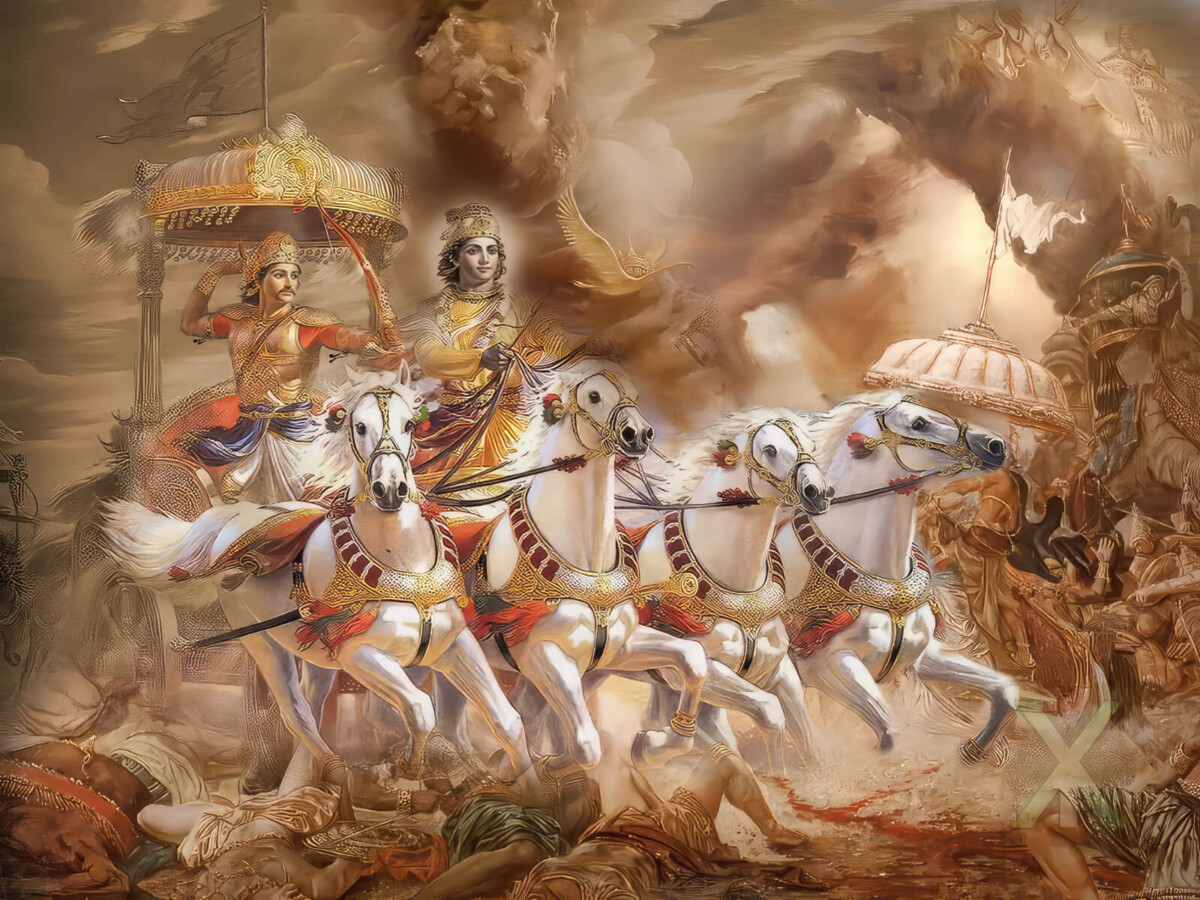
Noted References of ‘Steadfastness in Action’ in the Bhagavad Gita:
योगयुक्तो विशुद्धात्मा विजितात्मा जितेन्द्रियः |
सर्वभूतात्मभूतात्मा कुर्वन्नपि न लिप्यते ||
(Bhagavad Gita 5.7)
This verse refers to Akarma—an action that leaves no karmic residue. When one is spiritually aligned, self-controlled, and unattached, even in action, one remains unaffected. The Karma Yogi acts out of selfless love, not personal gain, and thereby transcends the cycle of reactions. Such a person becomes universally compassionate, disciplined in thoughts and desires, and free from worldly entanglements.
ब्रह्मण्याधाय कर्माणि सङ्गं त्यक्त्वा करोति यः |
लिप्यते न स पापेन पद्मपत्रमिवाम्भसा ||
(Bhagavad Gita 5.10)
Just as a lotus remains untouched by water, the person who performs actions in dedication to the Divine, without selfish attachment, remains unaffected by sin. This verse encourages detachment through surrender—selfless action as a spiritual offering.
ज्ञेयः स नित्यसंन्यासी यो न द्वेष्टि न काङ्क्षति |
निर्द्वन्द्वो हि महाबाहो सुखं बन्धात्प्रमुच्यते ||
(Bhagavad Gita 5.3)
This shloka praises the one who is free from both aversion and desire—a true renunciate. The Karma Yogi, by renouncing the fruits of action and dualities of emotion, rises above worldly bondage and attains liberation.
Steadfastness in Devotion
The earliest seeds of Bhakti Yoga—the yoga of devotion—can be traced back to the Vedas and the Shvetashvatara Upanishad. In this Upanishad, “bhakti” is understood not just as love for God but as deep devotion to any higher ideal. It redefined spiritual practice by emphasizing heartfelt surrender over ritual precision.
The Bhagavad Gita further elevates Bhakti Yoga, describing it as one of the four main paths to divine realization. While the intellectual may prefer Jnana and the active may choose Karma, the heart-driven individual finds fulfilment in Bhakti. From the 12th to 18th centuries, the Bhakti Movement swept across India, rejecting caste and ritual hierarchy in favour of personal devotion. Poets like Mirabai became icons of this emotional and intimate surrender to the Divine, particularly Lord Krishna.
Noted References of ‘Steadfastness in Devotion’:
Shvetashvatara Upanishad:
“यस्य देवे परा भक्तिः यथा देवे तथा गुरौ ।
तस्यैते कथिता ह्यर्थाः प्रकाशन्ते महात्मनः ॥“
This profound verse underscores dual devotion—to God and to the Guru. Only a disciple who serves both with equal love can grasp the true essence of the scriptures. The Guru becomes the guiding light on the path of devotion, essential for spiritual maturity.
Bhagavad Gita:
“मय्यावेश्य मनो ये मां नित्ययुक्ता उपासते |
श्रद्धया परयोपेतास्ते मे युक्ततमा मताः ||”
(Bhagavad Gita 12.2)
Krishna describes the supreme yogis as those who, with unwavering minds and constant devotion, worship Him in full faith. These steadfast practitioners are closest to the Divine and destined for self-realization.
“ये तु सर्वाणि कर्माणि मयि संन्यस्य मत्परः |
अनन्येनैव योगेन मां ध्यायन्त उपासते ||
तेषामहं समुद्धर्ता मृत्युसंसारसागरात् ||”
(Bhagavad Gita 12.6–7)
Those who offer all actions to God and meditate upon Him with single-minded devotion are lifted from the ocean of birth and death. This illustrates the redemptive power of pure, focused Bhakti.
Steadfastness in Knowledge
Jnana Yoga, or the path of knowledge, seeks the ultimate understanding: that the individual self (Atman) is identical to the universal self (Brahman). The Upanishads form the metaphysical core of this path. They teach that true wisdom lies not in rituals or beliefs but in direct realization through contemplation, study, and inner inquiry.
The Bhagavad Gita refers to Jnana Yoga as Buddhi Yoga and speaks of it as the highest realization—though also the most challenging. It demands a formless pursuit of truth and detachment from material identities, making it suitable for the deeply introspective and rational seeker.
Noted References of ‘Steadfastness in Knowledge’:
“योगसंन्यस्तकर्माणं ज्ञानसंछिन्नसंशयम् |
आत्मवन्तं न कर्माणि निबध्नन्ति धनञ्जय ||”
(Bhagavad Gita 4.41)
Here, Krishna tells Arjuna that one who has renounced actions through Yoga and removed all doubts through knowledge is free from bondage. This emphasizes the liberating potential of self-knowledge.
“न मां दुष्कृतिनो मूढाः प्रपद्यन्ते नराधमाः |
माययापहृतज्ञाना आसुरं भावमाश्रिताः ||”
(Bhagavad Gita 7.15)
This shloka identifies four categories of people who fail to surrender to God—those who are ignorant, lazy, deluded by Maya, or possessed by demonic tendencies. It serves as a caution against arrogance and spiritual inertia.
“तेषां ज्ञानी नित्ययुक्त एकभक्तिर्विशिष्यते |
प्रियो हि ज्ञानिनोऽत्यर्थं अहं स च मम प्रियः ||”
(Bhagavad Gita 7.17)
Among all devotees, the one of wisdom is the most beloved. This devotee, united with the Divine through knowledge and devotion, holds a special and close place in God’s heart. This verse beautifully and tactically merges Jnana with Bhakti.
Conclusion
Having explored Steadfastness in Action, Steadfastness in Devotion, and Steadfastness in Knowledge, it becomes clear that the paths described in the Bhagavad Gita and other Hindu scriptures are not mutually exclusive. Instead, they serve different aspirants according to their temperament and level of consciousness.
Lord Krishna himself affirms this in the Srimad Bhagavatam:
योगास्त्रयो मया प्रोक्ता नृणां श्रेयोविधित्सया ।
ज्ञानं कर्म च भक्तिश्च नोपायोऽन्योऽस्ति कुत्रचित् ॥
(Bhagavatam 11.20.6)
“I have described three paths—Jnana (knowledge), Karma (action), and Bhakti (devotion)—for the upliftment of humanity. There exists no other way to achieve perfection.”
However, in Kali Yuga, the age of spiritual decline and materialism, Bhakti Yoga is said to be the most accessible and effective path. It allows even the simplest of seekers to forge a personal relationship with the Divine, bypassing the complexity of rituals or philosophical debate.
All three paths—Karma, Jnana, and Bhakti—converge ultimately in realising the self and surrendering to the Supreme. But in this age, it is the heart’s devotion, more than the intellect or labour, that becomes the swiftest route to spiritual fulfilment. Would you like this formatted into a downloadable PDF or used in a specific medium (e.g., blog post, booklet, presentation)?