
Buddhism: The Path of Awakening Across Time and Continents
(Based on the live discourse of Param Dwij)
(परम द्विज के प्रवचन पर आधारित)
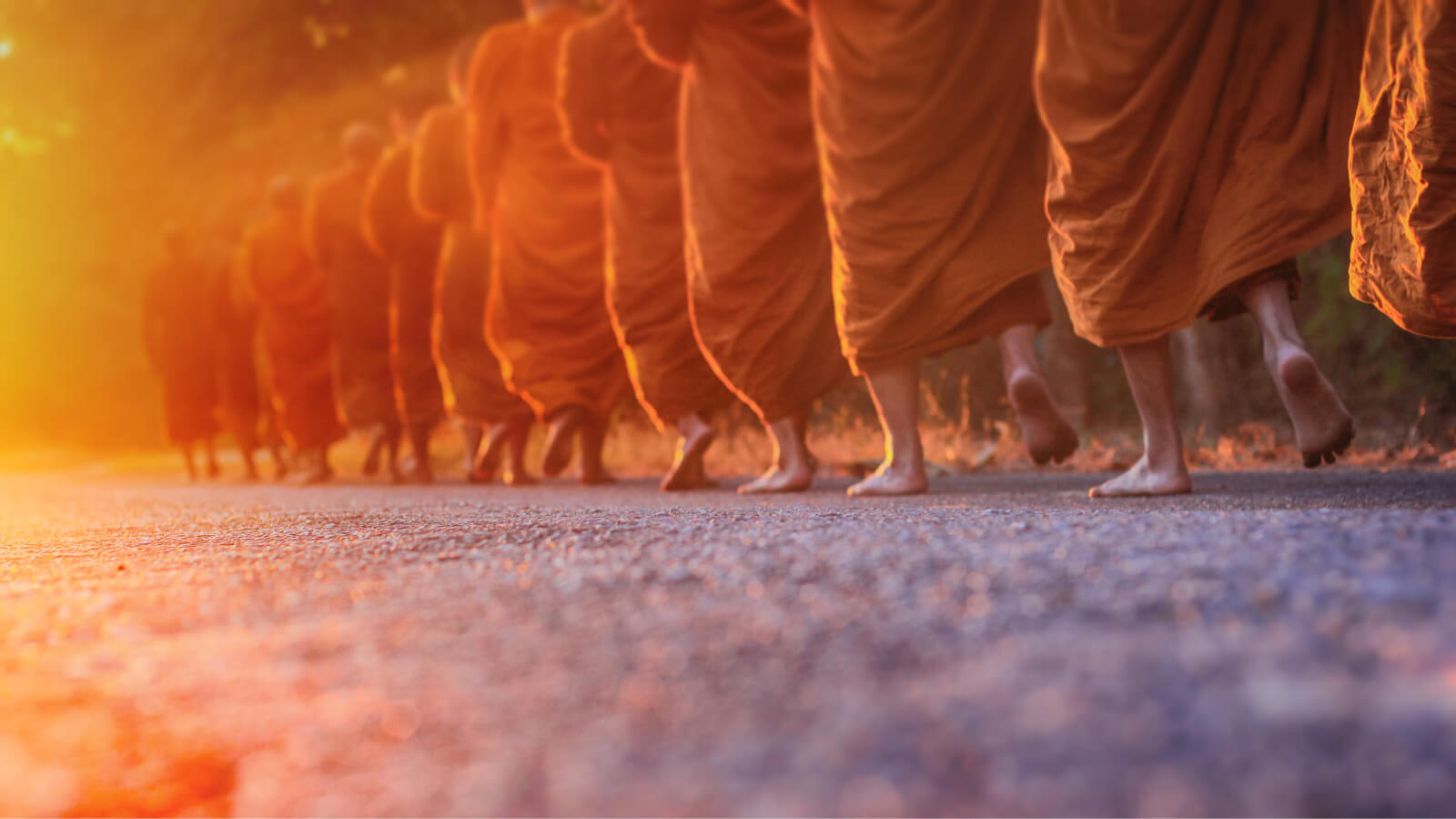
Buddhism, one of the oldest spiritual traditions in the world, continues to thrive across the Asia-Pacific region, where it first took root more than two and a half millennia ago. Even today, nearly 99% of the global Buddhist population resides in Asia, though they represent a modest 12% of the region’s entire population. Beyond Asia, regions like North America and Europe host Buddhist communities that surpass the million mark, reflecting the quiet yet steady spread of the Buddha’s teachings across cultures. However, it is the Asia-Pacific belt that remains the heartland of this tradition. All ten countries with the most significant Buddhist populations—such as China, Thailand, Japan, Myanmar, Sri Lanka, and Vietnam—are situated here, with China alone accounting for nearly 50% of the global Buddhist population.
Buddhism traces its origins to the fertile spiritual landscape of ancient India during the sixth to fourth century BCE, a time characterised by profound philosophical exploration and significant religious transformation. This era was marked by the rise of various schools of thought, each seeking answers to fundamental questions about existence, suffering, and the nature of reality. In contrast to Hinduism, which developed gradually over centuries without a specific founder, Buddhism crystallised around the life and teachings of a singular, pivotal figure: Siddhartha Gautama. Born into a royal family in what is now Nepal, Siddhartha experienced a life of luxury until he ventured beyond the palace walls and encountered the realities of ageing, illness, and death. These profound experiences prompted him to renounce his privileged life in search of a deeper understanding of suffering and the path to liberation.
After years of rigorous meditation and ascetic practices, Siddhartha achieved enlightenment under the Bodhi tree, becoming the Buddha, or the “Awakened One.” His teachings, known as the Dharma, emphasised the Four Noble Truths and the Eightfold Path, offering a framework for addressing suffering and attaining nirvana. Buddhism thus emerged as a distinct spiritual tradition, advocating for a middle way that combines ethical living, mental discipline, and wisdom, providing a roadmap for individuals seeking peace and liberation from the cycle of birth and rebirth.
Siddhartha was born into royalty, a prince of the Shakya clan in present-day southern Nepal, just on the edge of the Ganges River valley—then the cradle of ancient Indian civilisation. His birth, wrapped in prophecy, carried the weight of destiny. A sage foretold that Siddhartha would either become a great monarch or renounce everything to become a world saviour. Fearful of losing his son to the spiritual path, Siddhartha’s father enclosed him in a life of opulence, shielding him from every trace of suffering. Within the gilded walls of his palace, Siddhartha knew only pleasure, comfort, and ease.
Yet, unwavering in its pursuit of truth, life pierced through the veil of illusion surrounding Siddhartha. During a fateful chariot ride beyond the opulent palace gates, he was confronted with four sights that would irrevocably transform his understanding of existence: a frail, sick man struggling with despair, an elderly figure whose weary face bore the marks of time, a lifeless corpse, cold and unyielding, and a serene ascetic whose tranquil presence radiated wisdom and detachment. These profound encounters with the realities of sickness, ageing, death, and spiritual peace shattered the fragile cocoon of luxury in which he had been sheltered. The stark contrast between his sheltered, lavish life and the harsh truths of human suffering ignited a deep restlessness within him, a discontent that no amount of wealth or comfort could quell. Siddhartha’s heart stirred with an urgent longing for understanding and meaning, propelling him on a quest for enlightenment that would lead him far from the comfort of his privileged existence.
Unable to ignore the turmoil within, Siddhartha made a radical decision—he left behind his wife, newborn son, title, and kingdom. He embraced the life of a renouncer, wandering in search of truth and a remedy for suffering. For years, he practised extreme austerity, denying himself even food and water, hoping to conquer suffering through self-mortification. But one day, weakened to the brink of death, he collapsed and realised that this too was not the way. He accepted food, regained strength, and sat beneath a Bodhi tree in Bodh Gaya, vowing not to rise until he attained the truth. After deep meditation, he reached a profound state of awakening—what he called Nirvana, or liberation from the cycle of suffering.
The moment beneath the Bodhi tree was not merely a personal triumph; it signified the profound birth of Buddhism, a spiritual awakening that would resonate through centuries. Under the expansive limbs of this sacred fig tree, Siddhartha Gautama, after deep contemplation and meditation, attained enlightenment, transforming into the Buddha. This pivotal experience marked the beginning of a journey that would change countless lives and philosophies around the world. Today, the Mahabodhi Temple in Bodh Gaya, Bihar, India, stands as a revered monument to this enlightenment. With its intricate architecture and serene atmosphere, it draws pilgrims and tourists alike, serving as a powerful reminder of the quest for inner peace and understanding that Buddhism promotes. The temple, recognised as a UNESCO World Heritage site, not only honours the historical significance of the Buddha’s awakening but also embodies the continued relevance of his teachings in a modern context.
After attaining Nirvana, the Buddha made a conscious decision not to retreat into silence or solitude. Instead, he chose to embody compassion and wisdom by sharing his insights with others. Recognising the profound suffering that pervaded human existence, he dedicated himself to teaching and guiding those seeking liberation from the cycle of birth, death, and rebirth. His teachings, collectively known as the Dharma, encompassed a rich tapestry of principles and practices aimed at alleviating suffering and fostering enlightenment.
The Buddha’s approach was not merely theoretical; it was deeply practical, encouraging individuals to engage in mindfulness, ethical conduct, and meditation as pathways to understanding the nature of reality. He illuminated the Four Noble Truths and the Eightfold Path through his discourses, offering a structured framework that has inspired countless followers over the centuries. His compassionate engagement with those around him laid the foundation for a transformative way of life that emphasises the importance of community, self-awareness, and the pursuit of wisdom as routes to ultimate freedom. Central to these teachings are the Four Noble Truths:
- Dukkha (The Truth of Suffering): Life is filled with suffering—pain, impermanence, and dissatisfaction.
- Samudaya (The Origin of Suffering): This suffering arises from craving, attachment, and ignorance.
- Nirodha (The Cessation of Suffering): It is possible to end suffering.
- Magga (The Path to End Suffering): The way to liberation lies in following the Eightfold Path.
The Eightfold Path is a practical guide for ethical living, mental discipline, and wisdom. Often visualised as a wheel with eight spokes (the Dharma Wheel), it includes:
- Right Understanding (Samma ditthi) – Understanding the nature of reality and the Four Noble Truths.
- Right Thought (Samma sankappa) – Cultivating intention free from ill will or harmful desire.
- Right Speech (Samma vaca) – Speaking truthfully and kindly.
- Right Action (Samma kammanta) – Acting with integrity and non-violence.
- Right Livelihood (Samma ajiva) – Earning a living without causing harm.
- Right Effort (Samma vayama) – Persevering in wholesome actions and thoughts.
- Right Mindfulness (Samma sati) – Being aware of the present moment and one’s inner states.
- Right Concentration (Samma samadhi) – Cultivating deep meditative focus.
Alongside these, Buddhists live by five moral precepts, simple yet powerful commitments that include: refraining from killing living beings, stealing, sexual misconduct, lying, and consuming intoxicants. These form the ethical backbone of Buddhist life.
Following the Buddha’s passing in 483 BCE, his followers formed communities and monastic orders to preserve and spread his teachings. Over centuries, Buddhism took root in new lands, carried by monks, merchants, travellers, and kings. One of the greatest patrons of Buddhism was Emperor Ashoka of India, who not only adopted Buddhism but also actively sent missionaries across Asia and supported the construction of monasteries, stupas, and educational centres. Under his reign, Buddhism became the spiritual heartbeat of India and spread to Sri Lanka, Central Asia, and Southeast Asia.
Yet, history was not always kind. Invasions, such as those by the Huns in the 6th century and later the spread of Islam, saw the decline of Buddhism in India. Many monasteries were destroyed, texts lost, and practitioners driven away. Still, the Dharma survived and flourished elsewhere—in Tibet, China, Japan, and across Southeast Asia—adapting to new cultures while preserving its core.
Over time, Buddhism evolved into three main branches, each with its own emphasis:
- Theravāda (“The Teaching of the Elders”) is the oldest school and is predominant in Sri Lanka, Thailand, Laos, Myanmar, and Cambodia. It emphasises meditation, monastic life, and a direct path to individual liberation.
- Mahāyāna (“The Great Vehicle”) is widespread in China, Korea, Japan, and Vietnam. It introduced the ideal of the Bodhisattva—an enlightened being who chooses to remain in the cycle of rebirth to help others achieve Nirvana.
- Vajrayāna (“The Diamond Vehicle”), practised in Tibet, Mongolia, and Bhutan, incorporates tantric rituals, mantras, and esoteric practices. It promises a swifter path to enlightenment under the guidance of a qualified guru.
Within these schools, several sub-sects have emerged over time—Zen Buddhism in Japan, Pure Land Buddhism, and others that combine local traditions with core Buddhist philosophy.
Buddhism is also unique in its vast and varied scriptural tradition, reflecting its evolution and spread. Some key texts include:
- The Tipiṭaka (Pāli Canon): Literally meaning “Three Baskets,” this foundational text of Theravāda Buddhism includes:
- Vinaya Pitaka (rules for monastics),
- Sutta Pitaka (discourses of the Buddha),
- Abhidhamma Pitaka (philosophical and psychological analysis).
- Originally passed down orally and later written in Pāli, this collection now spans nearly 50 volumes in print.
- Mahāyāna Sūtras: Numbering over 2,000, these texts emerged as Mahāyāna Buddhism evolved. Different sects focus on different sūtras, but among the most revered are:
- The Lotus Sūtra – emphasising universal salvation and the eternal nature of the Buddha.
- The Heart Sūtra – a profound exploration of emptiness (śūnyatā) and the nature of reality.
- The Tibetan Book of the Dead (Bardo Thodol): A seminal Vajrayāna text, this scripture guides the soul through the intermediate states between death and rebirth. Rich in symbolism, it reflects the Tibetan view of consciousness and liberation during the transition beyond death.
Today, Buddhism stands as both a religion and a philosophy of life—offering not just rituals and beliefs, but a deeply practical path toward inner peace, clarity, and compassionate living. Whether in the quiet of a forest monastery in Thailand, a Zen temple in Kyoto, or a Dharma centre in California, the voice of the Buddha still echoes: “Be a lamp unto yourself. Work out your salvation with diligence.”
In a world increasingly defined by noise, anxiety, and distraction, the Buddhist way—rooted in silence, mindfulness, and love—remains more relevant than ever.