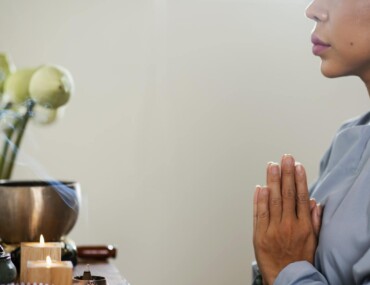
Breath as Bridge: Remembering Brahm with Every Inhale
(Based on the live discourse of Param Dwij)
(परम द्विज के प्रवचन पर आधारित)
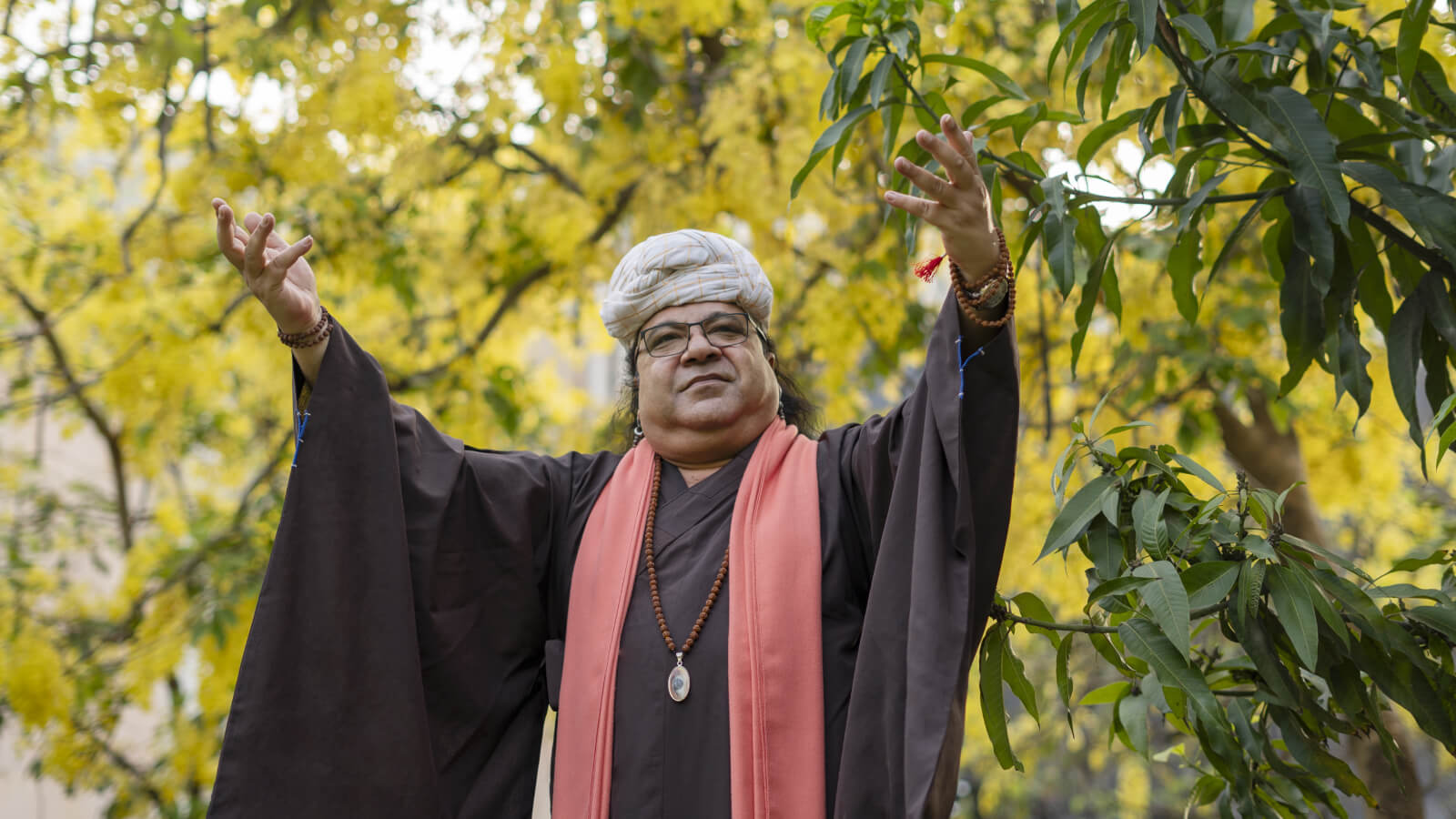
We live so close to our breath, yet in the busyness of modern life, many of us have forgotten its inherent sacredness. We breathe automatically, often oblivious to the rhythm and quality of each inhalation and exhalation. We find ourselves inhaling while our minds are occupied with distractions, and exhaling under the weight of stress and pressure. But what if we were to consider breath not merely as a physiological function, but as a profound philosophical practice? What if engaging with our breath consciously could guide us back to a place of inner peace and self-awareness?
Param Dwij says:
“The breath is not just air—it is remembrance. With every conscious inhale, you return to Brahm.”
In the Living Dwij path, breath is revered as more than just a vital life function; it is viewed as a powerful gateway to awakening and understanding. It serves as the foundational step in cultivating presence, the initial tool for establishing discipline in our daily lives, and the first prayer uttered in the quiet sanctuary of our inner silence. By tuning into our breath, we can transform our experience, allowing us to reconnect with our true selves and the world around us. This mindful engagement with breathing opens doors to deeper introspection and can enhance our overall sense of well-being.
The Forgotten Teacher Within
At birth, the breath arrives before language. It becomes our lifelong companion—silent, steady, patient. And yet, we rarely listen.
In moments of stress, we hold it. In moments of fear, we shorten it. In moments of grief, we lose it. But in moments of stillness—we can return to it.
Param Dwij says:
“You don’t have to reach Brahm. You just have to breathe until all else falls away.”
Your breath knows the way back. All it asks is your attention.
Breathing as a Spiritual Practice
In the Dwij way, breath is not just a self-help technique. It is a discipline of presence. A sacred alignment of the body, mind, and spirit. A soft chant of life itself.
Here are three Dwij breathing disciplines:
1. Sthir Prān: The Breath of Stillness
Take five minutes daily to sit in silence. No music. No mantra. Just your breath. Let each inhale be soft, each exhale longer than the one before. This creates the inner condition for stillness to bloom.
2. Dhyan Prān: Breath into Awareness
Whenever your thoughts spiral or emotions swell, return to the breath—not to suppress, but to observe. Feel the air enter your nostrils, expand your chest, and leave your body. This anchors the mind in presence.
3. Seva Prān: Breath as Offering
While serving—cooking, sweeping, holding space—breathe with awareness. Offer the act with every exhale. This transforms ordinary tasks into sacred service.
Scientific and Spiritual Truths Converge
Modern research shows that conscious breathing affects the parasympathetic nervous system, reducing anxiety, blood pressure, and inflammation. But the Living Dwij approach reminds us that this healing is not just biological—it’s existential.
Breath doesn’t just calm the body. It cleanses the spirit. It doesn’t just release toxins. It releases attachments. It doesn’t just lower cortisol. It raises consciousness.
Param Dwij says:
“The breath is not yours—it is Brahm flowing through you. You are not the breather. You are the breath.”
Your Breath and Your Becoming
As you start to breathe more consciously, a profound shift begins to unfold in the way you navigate life. You find yourself slowing down, allowing each moment to unfold without rush. This intentional pace opens your ears, enabling you to listen more attentively—not just to others, but to the subtle whispers of your own heart and mind. You notice how often you react impulsively, and with this awareness, you create space for choice and reflection.
In this newfound clarity, you become attuned to the intricate patterns that have shaped your responses and behaviours over time. You realise that nestled behind every sigh is a personal narrative, a chapter that reflects your experiences, fears, and aspirations. With each deliberate, deep breath, you are given an opportunity to pause and rewrite these stories, infusing them with understanding and intention.
Even the act of forgiveness, often seen as a challenging journey, begins with this simple yet profound practice of mindful breathing. Inhale deeply and exhale slowly, and you may find the weight of grudges and resentments lifting slightly. Similarly, compassion emerges in the stillness between breaths, allowing you to empathise more fully with the experiences of others. Surrender, too, reveals itself in moments of quiet inhalation and exhalation, urging you to let go of control and embrace the flow of life.
Through the power of conscious breathing, you begin not just to exist, but to truly live.
A Living Dwij Evening Practice
Each night before sleep, sit upright and take seven deep breaths. With each inhale, whisper internally: “I return.”
With each exhale: “I release.”
After the 7th breath, place your hand on your heart and say:
“I am breath. I am Brahm. I am enough.”
This daily ritual isn’t about performance. It’s about presence.
Closing Thought
You don’t need a grand temple to encounter the Divine; divinity is not confined to specific spaces or structures. Similarly, you don’t require a mantra to find moments of stillness in the chaos of life. All you truly need is to breathe with conscious awareness.
Consider the breath you often overlook; it holds the potential to reveal the answers you seek. Each inhalation and exhalation can serve as a gateway to deeper understanding and connection. By tuning in to your breath, you can cultivate a profound sense of presence that allows you to explore the sacred within and around you. Embrace each breath as a step toward awakening, and you may discover insights that have been waiting patiently for your attention.
Param Dwij says:
“Brahm is not far. He arrives with your next conscious breath.” Inhale gently. Exhale fully. Welcome home.