Before I Step Into the Year, I Stand Still
(Based on the live discourse of Param Dwij)
(परम द्विज के प्रवचन पर आधारित)
A New Year Letter by Param Dwij
When the Year Turns Loud
When the year changes, the world becomes loud in a way that is difficult to ignore. The noise is not only external, but internal. There are celebrations, summaries, declarations, and resolutions layered over one another, each demanding attention. People speak of endings and beginnings as though they are separate events, cleanly divided by a midnight countdown. Social spaces fill with certainty, with lessons learned, with promises made in advance of experience.
Yet beneath this collective urgency, I notice something far more honest. Many people do not feel renewed at the start of a new year. They feel tired, not dramatically exhausted, but quietly worn. They feel unfinished in ways that cannot be captured by posts or reflections. They are still carrying what the year demanded of them emotionally, ethically, physically, and inwardly.
I have felt this myself often enough to recognise it in others.
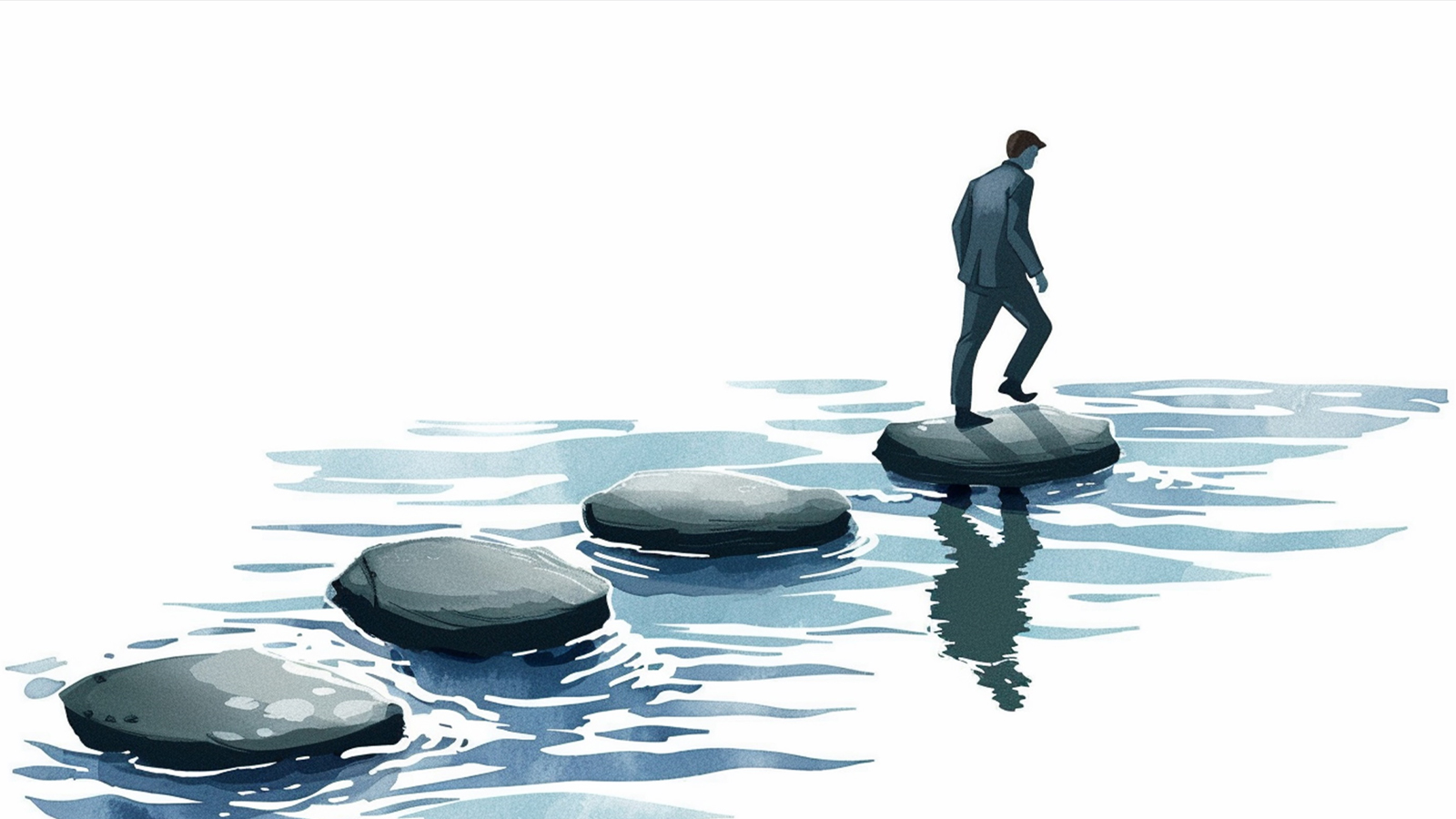
So I do not add to the noise. Before I step forward, I stand still.
This stillness is not withdrawal from life. It is not resistance to change. It is how I prepare to meet life without distortion. Over time, I have learned that the way one enters a year often shapes how one lives through it. If I enter in haste, I live in reaction. If I enter in awareness, I live in response. Living Dwij was created so that this way of meeting life does not remain private or accidental, but is lived deliberately, without spectacle.
The Pressure to Feel Ready
There is an unspoken expectation that the New Year must be met with confidence. That optimism is not merely encouraged, but required. That hesitation is weakness, and uncertainty is something to overcome quickly. I have never found this expectation to be rooted in truth.
Readiness cannot be forced. When it is, it becomes pretence rather than clarity. I have seen how people exhaust themselves trying to feel ready because they believe they should. They confuse emotional display with inner alignment. They mistake enthusiasm for understanding.
I have learned something quieter. Awareness is enough. Clarity does not demand excitement. It does not insist on declarations or promises. It asks only for attention.
The year does not require enthusiasm. It responds to honesty.
Through my work with Living Dwij, I have encountered countless people who believed they were failing simply because they did not feel hopeful on cue. What they were actually experiencing was sincerity. They were listening to themselves rather than providing reassurance. I no longer confuse sincerity with weakness. There is nothing fragile about standing where you are without decoration.
On the Feeling of Being Behind
Many people enter the New Year carrying a quiet, persistent belief that they are late. Not late in a dramatic sense, but in a way that subtly erodes dignity. They feel that life has moved faster than they have. That others have crossed thresholds while they themselves are still gathering courage, clarity, or strength. That there is something fundamentally delayed about their becoming.
I recognise this belief, and I do not accept it.
Time does not rank lives. Awareness does not operate on schedules. What appears as a delay from the outside is often integration on the inside. What feels like stagnation may be preservation in disguise. Some seasons do not advance us forward; they deepen us downward. They prepare the ground rather than produce movement.
Before I believe the noise of comparison, I return to this truth. Every life unfolds according to conditions that cannot be meaningfully measured against one another. Living Dwij exists, in part, to remind people that their worth is not determined by arrival, but by the integrity of presence.
Meeting the Year That Is Ending
I do not rush to close the year that is ending. Most years do not resolve cleanly. They trail off with loose threads, unanswered questions, and emotions that have not yet found language. I no longer treat this as a failure.
I look back carefully. I notice where I abandoned stillness to keep pace, where I compromised truth for convenience. Where survival replaced presence. I also notice moments of courage, moments when I stopped, spoke, or chose alignment over ease.
I do not demand explanations from myself. Recognition is enough.
What is seen clearly loses its power to repeat unconsciously. This is not a reflection for improvement. It is recognition for integrity. Improvement often seeks control. Integrity restores coherence.
Much of what I share through Living Dwij comes from this discipline: learning to look honestly at how one has lived, without condemnation and without excuse.
The Pause I Trust
Before the year begins, I return to what is simplest. I breathe without correcting it. I notice the body before the mind, because the body carries truths the mind often organises away. Awareness settles naturally where effort relaxes.
From this space, I ask one question, and I allow it to remain unanswered if it must:
What am I still carrying that deserves acknowledgement before I move on?
This question is not asked to extract insight on demand. It is requested to invite honesty. Sometimes an answer arrives immediately. Sometimes it arrives weeks later, through discomfort, clarity, or quiet realisation. Silence is not absence. It is information.
Living Dwij was shaped around this understanding—that stillness is not escape, but intelligence.
Allowing Uncertainty
I have noticed how deeply the mind resists uncertainty at the start of a new year. Plans are often made not because they are needed, but because uncertainty feels unbearable. The future is asked to reassure us, to promise meaning, to justify effort in advance.
I no longer ask the year to explain itself to me.
Uncertainty is not a flaw in life’s design. It is the space where awareness remains alive. When everything is certain, attention dulls. When outcomes are fixed, presence weakens. I enter the year not needing guarantees, but willing to respond.
Living Dwij functions from this ground—engaged with life, responsible in action, yet unattached to rigid outcomes.
On Becoming and Identity
At the turn of the year, there is often pressure to become someone else. A better version. A stronger version. A more disciplined version. Identity becomes a project, and the self becomes something to correct.
I have stepped away from this struggle.
Becoming is not my responsibility. Being is. When I am present, becoming takes care of itself. When I am absent, no amount of self-improvement compensates for that absence. I do not reject growth, but I refuse to grow at the cost of inner truth.
The year does not need a new version of me. It requires me intact.
Living Dwij is not about constructing identities. It is about aligning life with what is already known inwardly.
Effort Without Violence
I still make an effort. I still work, choose direction, and show up for what life asks of me. But I watch closely for violence—the subtle kind that disguises itself as discipline. The harsh inner voice. The refusal to rest. The belief that worth must be earned repeatedly.
Effort rooted in fear always exhausts. Effort rooted in clarity sustains. I do not push myself into the year. I walk into it.
One of the central intentions behind Living Dwij is to demonstrate that effort and compassion are not opposites. Movement does not require self-betrayal.
Time, Patience, and Right Pace
Time has taught me patience, not because it is slow, but because it is exact. Nothing arrives before its readiness. Nothing stays beyond its relevance. What feels delayed often comes with a depth that haste could never produce.
I have stopped arguing with timing. Patience is not passive waiting; it is active trust in awareness. When I am patient, I remain available to what is actually happening, rather than distracted by what I believe should be happening.
Living Dwij honours the right pace as an ethical choice, not a weakness.
Seva in Everyday Life
As the year begins, I notice how I relate to the world around me, whether I listen to respond or to understand. Whether I meet differences with curiosity or defensiveness. Whether I treat people as interruptions or as part of the same unfolding life.
Seva appears quietly here. Sometimes it is silence instead of an argument. Sometimes it is restraint instead of reaction. Sometimes it is present without advice. I have learned that the deepest service is often invisible.
Living Dwij exists so this understanding does not remain inward, but enters ordinary life.
What I Carry Forward
I do not carry goals into the year. I have learned that goals, while useful at times, often narrow attention rather than deepen it. They can quietly turn life into a checklist and reduce living to achievement. Instead, I carry a quality. I carry honesty, balance, presence, and clarity—not as ideals to reach, but as inner references to return to.
These are not achievements to be chased, because chasing immediately creates distance. They are orientations. When distraction takes over, when momentum pulls me outward, when urgency clouds perception, I return to these qualities as one returns home. They remind me how to stand, how to speak, how to act without fragmentation.
This is not discipline. Discipline implies force and resistance.
This is alignment—the quiet coherence that emerges when inner understanding and outer action are no longer at odds.
Forgetting and Returning
I know that I will forget. I know that distraction will return, sometimes gently, sometimes forcefully. I know there will be days when awareness feels distant and old habits reclaim their ground without announcement. I no longer dramatise this.
Forgetting is not failure. It is part of being human.
What matters is not the absence of forgetting, but the capacity to return. Returning is the practice. Each return strengthens orientation. Each moment of recognition restores integrity more deeply than prolonged periods of mechanical effort ever could.
I have learned to trust sincerity over consistency. Consistency without awareness becomes rigidity. Sincerity, even when interrupted, keeps the path alive. When I return honestly—even after drifting far—I am already aligned again.
Entering the Year
I do not reinvent myself at the threshold of the year. Reinvention often implies rejection of what already exists. I do not pressure the year to justify my effort, nor do I demand that it deliver certainty in advance.
I enter knowing there will be clarity and confusion, movement and pause, confidence and hesitation. I allow both without abandoning myself. I no longer treat discomfort as an obstacle to living. I treat it as information.
The year does not ask for perfection.
It asks for presence—the willingness to meet each moment without distortion, without rehearsed identities, without unnecessary self-violence.
A Closing Reflection
As I step into the year, I do so without rehearsed optimism and without concealed fear. I do not inflate hope, and I do not suppress uncertainty. I let clarity guide effort, awareness precede ambition, and patience soften urgency.
May this year ask no more of me than I can offer honestly.
May it deepen me before it defines me.
May it strip away what is false before it adds what is new.
May it pass not as time spent, but as awareness lived.
I stand still once more—not as hesitation, but as grounding.
From this stillness, I move.
Now, I step forward.
— Param Dwij