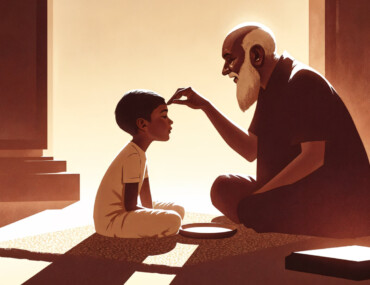
Awareness: The First Step to Liberation
(Based on the live discourse of Param Dwij)
(परम द्विज के प्रवचन पर आधारित)

Param Dwij says:
“You cannot change what you do not see. And once you truly see, change is already on its way.”
Spirituality is often romanticised—wrapped in mantras, rituals, and transcendental experiences. But beneath all of that, the real spiritual journey begins in a much quieter, humbler place: awareness. Not the kind of surface-level attention we offer to tasks or conversations, but the deeper state of Jagrukta—a conscious witnessing of our own mind, emotions, and patterns. In the Living Dwij path, awareness is not optional—it is the foundation. It is the bridge between your current state of being and the freedom your soul longs for.
Awareness is more than just being alert. It’s not just about noticing what’s around you, but recognising what’s within you—without judgment or denial. It’s the subtle shift from being lost in your thoughts to seeing your thoughts clearly. Imagine feeling a surge of anger. An unaware mind says, “I’m angry,” and reacts impulsively. An aware mind pauses and says, “I notice anger rising within me,” and chooses whether to respond or release. This slight difference in perspective is the seed of liberation.
The power of awareness lies in the space it creates. Between the stimulus and your response, between the feeling and the action, between the habit and the choice—awareness gives you breathing room. And in that sacred space, transformation begins. Most suffering comes not from external circumstances, but from unconscious reactions. Once you become aware of your thoughts and attachments, they begin to lose their grip over you. You don’t have to fight them; you simply stop feeding them.
Param Dwij says:
“You are not your thoughts. You are the sky behind them.”
So how do you cultivate this awareness in your daily life? The Dwij discipline of Jagrukta recommends a gentle and consistent practice. Begin with a simple check-in ritual three times a day—morning, afternoon, and night. When your reminder goes off, pause for just a minute and ask: What am I feeling right now? What thoughts have been looping? What am I clinging to or resisting? Don’t fix anything. Don’t analyse. Just observe with the same neutrality as the sky observing a passing cloud.
One profound practice to cultivate self-awareness and compassion is the Mirror Reflection exercise. At the close of your day, take a moment to stand in front of a mirror, ensuring you are in a quiet space where you can focus. As you look into your own eyes, allow yourself to engage with your reflection fully. This is not a moment for judgment or self-correction; rather, it is an opportunity to forge a deeper connection with yourself.
In this intimate exchange, softly whisper the words: “I see you. I’m with you. Let’s return.” Allow these phrases to resonate within you, understanding that they embody support and acceptance. This practice invites you to observe yourself with kindness and compassion, emphasising the importance of being your own ally rather than a critic. Through this ritual, you begin to befriend the part of you that has always been there, silently watching your experiences and emotions. As you cultivate this connection, you may discover healing and a sense of belonging within yourself, fostering a nurturing relationship that can profoundly enrich your journey of self-discovery.
As you deepen in awareness, something beautiful begins to unfold. Emotions become messages, not masters. Triggers become teachers. Habits become conscious decisions. And silence no longer feels empty—it becomes your sanctuary. You’re no longer just reacting to life. You are participating in it with full presence.
Param Dwij says:
“Brahm does not hide from the unaware. The unaware hide from Brahm.”
Awareness, then, is not merely a tool for peace—it is the gateway to the Divine. As you become more aware, you stop looking for Brahm outside. You begin to feel Brahm within you—in your breath, in your choices, in the still space behind your eyes. So begin here. Begin now. Open your inner eyes. Notice your breath. Witness your patterns. Embrace the sacred discomfort of seeing clearly. For once you are truly aware, you are never again powerless.
You don’t have to abandon your life to experience awakening; instead, focus on living it with greater awareness and intention. Each moment holds the potential for transformation. Your next breath—deep and mindful—can ground you in the present. Your next thought, if observed with curiosity rather than judgment, can open windows to new perspectives. Even a fleeting moment of stillness, where the chaos of everyday life subsides, can serve as a gentle reminder of your true essence and help you regain a sense of clarity and purpose. Embrace these small but profound experiences, as they could mark the beginning of a deeper journey within.