
Islam: A Path of Submission, Stillness, and Divine Oneness
(Based on the live discourse of Param Dwij)
(परम द्विज के प्रवचन पर आधारित)
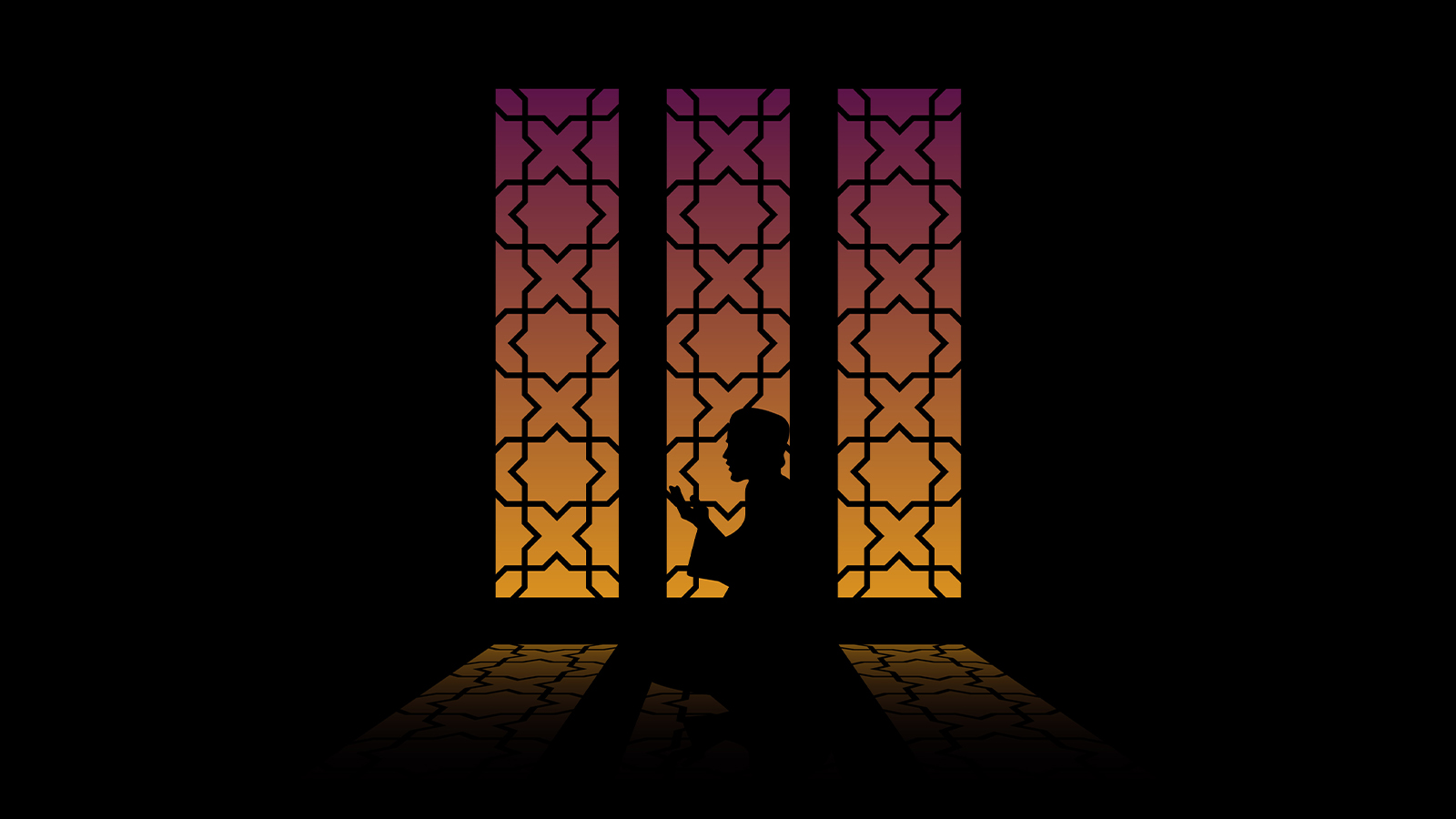
In the still spaces of the soul, when one pauses long enough to ask what it truly means to surrender, the echo of Islam may be heard—not merely as a religion of rites, but as a remembrance of origin. The word Islam itself means surrender—complete, unyielding, unwavering. And yet, paradoxically, it is in this surrender that one finds freedom. Not a freedom to act without accountability, but a freedom from inner conflict, from restlessness, from the illusion of control. Islam, as the name suggests, invites the human being to return—to align every facet of existence to the will of the One who breathes life into it.
Today, Islam is the second-largest religion in the world and is growing rapidly. Its followers—Muslims—live not only in the Middle East, as is commonly assumed, but across continents. From the vibrant communities in Indonesia, the most populous Muslim-majority country, to the spiritual soil of India, where Islam has interwoven with art, mysticism, resistance, and reform, the message of the Prophet Muhammad continues to inspire billions. Yet even beyond the numbers and demography, Islam presents itself not as a religion confined by geography, but as a path of alignment with Divine Will.
While Muslims often identify as either Sunni or Shia—two major schools of thought born from historical disagreements regarding leadership succession after the Prophet—the spiritual core of Islam transcends these divisions. Both groups anchor themselves in the same foundational truth: La ilaha illallah, Muhammadur Rasool Allah—there is no god but Allah, and Muhammad is the messenger of Allah. This Shahadah is not merely a verbal formula but a declaration of existential purpose. It signifies a shift—a conscious turning of the heart from multiplicity to unity, from ego to surrender.
The Essence of Tawhid: One God, One Reality
At the heart of Islam is the concept of Tawhid—the Oneness of God. This is not merely a theological assertion, but an invitation to see the world through the lens of unity. Islam rejects all forms of idolatry, not only in the literal sense, but even more profoundly in the subtle attachments of the heart. To affirm Tawhid is to declare that no power, no desire, no fear, no idea, no person can replace the supremacy of the Divine.
In a world torn by polarities—rich and poor, sacred and profane, Muslim and non-Muslim—Islam reminds the seeker that the origin is one, the Creator is one, and all creation flows from this singularity. The Qur’an, which Muslims believe to be the direct revelation from God through the Angel Gabriel to Prophet Muhammad, repeatedly calls humanity to reflect upon this unity—not only in faith, but in action. Nature, it says, submits to God’s command. The sun and the moon, the oceans and the mountains, the birds in flight and the stars in orbit—all are Muslim in their essence, for they follow Divine order without question. It is only the human being who resists, and in that resistance, suffers.
The Journey of the Prophet: From Cave to Community
Muhammad, the final messenger of Islam, was not a king or philosopher, but a shepherd and merchant—an orphan raised in a tribal society steeped in polytheism, injustice, and moral decay. Yet he carried within him a longing for something deeper. Disillusioned by the chaos around him, he would retreat to a cave on Mount Hira in solitude, seeking stillness. It was in that cave, amidst silence and surrender, that he received the first divine words: “Read, in the name of your Lord who created…”
This moment—known as the beginning of the revelation—is not just historical. It symbolises something every seeker must experience. The turning inward. The stripping away. The encounter with truth is not outside, but within. Over the next twenty-three years, Muhammad would continue to receive revelations, which were compiled after his death as the Qur’an—a text that Muslims hold not merely as scripture but as Divine Speech. The Qur’an does not speak to the intellect alone; it speaks to the soul. Its verses resound with rhythms of justice, remembrance, patience, community, gratitude, and humility.
But Muhammad was not only a messenger—he was also a model of spiritual embodiment. Known as al-Amin (the trustworthy), he lived the values he preached: gentleness with children, compassion toward animals, honour in trade, forgiveness toward enemies, and deep devotion in prayer. Islam, as taught by the Prophet, was not abstract theology—it was a lived presence. It was the integration of worship and ethics, prayer and justice, solitude and service.
Islam as a Way of Being: The Five Pillars
To walk the Islamic path is not merely to believe in God, but to shape one’s entire being around that belief. This is where the Five Pillars of Islam offer a framework—not as rigid rituals, but as rhythms of remembrance that bring the seeker back to Divine consciousness throughout the day and across the seasons of life.
The first is Shahadah—the testimony that affirms the unity of God and the role of Muhammad as the final messenger. It is the entry into the house of Islam, a declaration that realigns the soul toward its Source.
The second is Salat—prayer, performed five times a day. Each prayer is a moment of pause, a return to the ground, a prostration of ego. Unlike mere mental worship, Islamic prayer is embodied—hands lifted in surrender, forehead lowered in humility. It serves as a daily rhythm of recalibration, reminding the believer that no matter the demands of the world, there is always time to face the Divine.
The third pillar is Zakat—charity. Islam considers wealth both a blessing and a responsibility. The Qur’an commands believers to give a portion (2.5%) of their surplus wealth to those in need, not as charity but as purification. For what is the worth of abundance if it is not shared?
The fourth is Sawm—fasting during the month of Ramadan. It is not just an abstention from food and drink, but a purification of the body, mind, and heart. By willingly denying the self of its cravings, the Muslim learns patience, discipline, and empathy for the hungry.
The fifth pillar is Hajj—the pilgrimage to Mecca. It is the physical journey that represents an inner one—the stripping away of identities, status, and ego as millions gather in white garments to worship the One. In this pilgrimage, the barriers of race, language, and nationality dissolve, and the human stands alone before the Creator, as they once did, and as they always will.
Qur’an and Hadith: The Dual Sources of Guidance
The Qur’an is not seen as authored by Muhammad but is considered the literal word of God, revealed through the angel Gabriel. It’s 114 chapters span themes ranging from the Oneness of God to stories of earlier prophets—Noah, Moses, Abraham, Jesus—and their communities. It speaks of love and fear, mercy and punishment, personal ethics and public law.
Complementing the Qur’an is the Hadith—the sayings and actions of the Prophet Muhammad. These are not revelations, but reflections of how the Prophet applied Divine wisdom in everyday life. The Hadith collections serve as a guide for ethical living, spiritual cultivation, and communal harmony.
Together, the Qur’an and Hadith form the dual sources through which Islamic jurisprudence (Shariah) and spirituality (Tazkiyah) are shaped.
The Spiritual Core: Ihsan and the Heart’s Intention
Beyond submission and obedience lies the inner dimension of Islam—Ihsan, which means to worship God as though you see Him, and if you cannot, to know that He sees you. It is the spiritual flowering of Islam, where the outer form meets the inner essence. Ihsan demands sincerity, beauty, and presence. It is less about law, more about love. Less about obligation, more about remembrance.
This dimension is often explored through Islamic mysticism or Sufism, which focuses on purifying the heart and drawing near to the Beloved. Sufi poets like Rumi, Hafiz, and Rabia spoke of God not with fear, but with longing. They taught that it is not enough to obey God—one must also love Him.
The Prophet himself once said, “God does not look at your forms or wealth, but at your hearts and deeds.” This reflects the Dwij path too—that transformation begins within.
Justice, Mercy, and the Moral Compass
Islam does not restrict its message to private piety. It demands public justice. The Qur’an insists on fairness in trade, honesty in speech, compassion for orphans, protection of the poor, and kindness toward neighbours. It prohibits exploitation, usury, slander, and injustice. It acknowledges the diversity of creation—“We made you into nations and tribes so that you may know one another” (Qur’an 49:13)—not to divide, but to unite.
Prophet Muhammad emphasised this ethic: “The best among you is the one who is most beneficial to others.” He warned against religious arrogance and reminded his followers that even a smile can be charity.
A Way of Peace in a Divided World
In an era where Islam is often misunderstood—reduced to headlines or stereotypes—the need to return to its essence has never been greater. At its heart, Islam is not about conquest or compulsion. The Qur’an states clearly: “There is no compulsion in religion.” Islam honours the human soul, celebrates knowledge, and demands humility. It sees the world not as fallen, but as sacred. Every act—whether planting a seed or feeding the hungry—can become worship when done with the right intention.
And so, in the Dwij tradition, we recognise Islam not only as a religion, but as a profound invitation to stillness, remembrance, and surrender. It teaches that peace is not the absence of difficulty, but the presence of faith. That prayer is not escape, but engagement. That God is not distant, but closer than the jugular vein.
Conclusion: The Dwij Learns from the Muslim
The Dwij path, like the path of the Muslim, is a path of return. It begins with a question—Who am I?—and ends in silence. Islam reminds the Dwij that surrender is not weakness but wisdom. That discipline is not a burden but a blessing. That the heart, once realigned with Divine Will, becomes not only peaceful—but radiant.
In a world pulled by distraction and division, the message of Islam stands as a quiet mountain: Submit, not to fear or falsehood, but to Truth. Return, not to dogma, but to Divine simplicity. And in that return, become again what you always were—a soul in service of the One.