Maha Shivratri — A Night I Return to Stillness
(Based on the live discourse of Param Dwij)
(परम द्विज के प्रवचन पर आधारित)
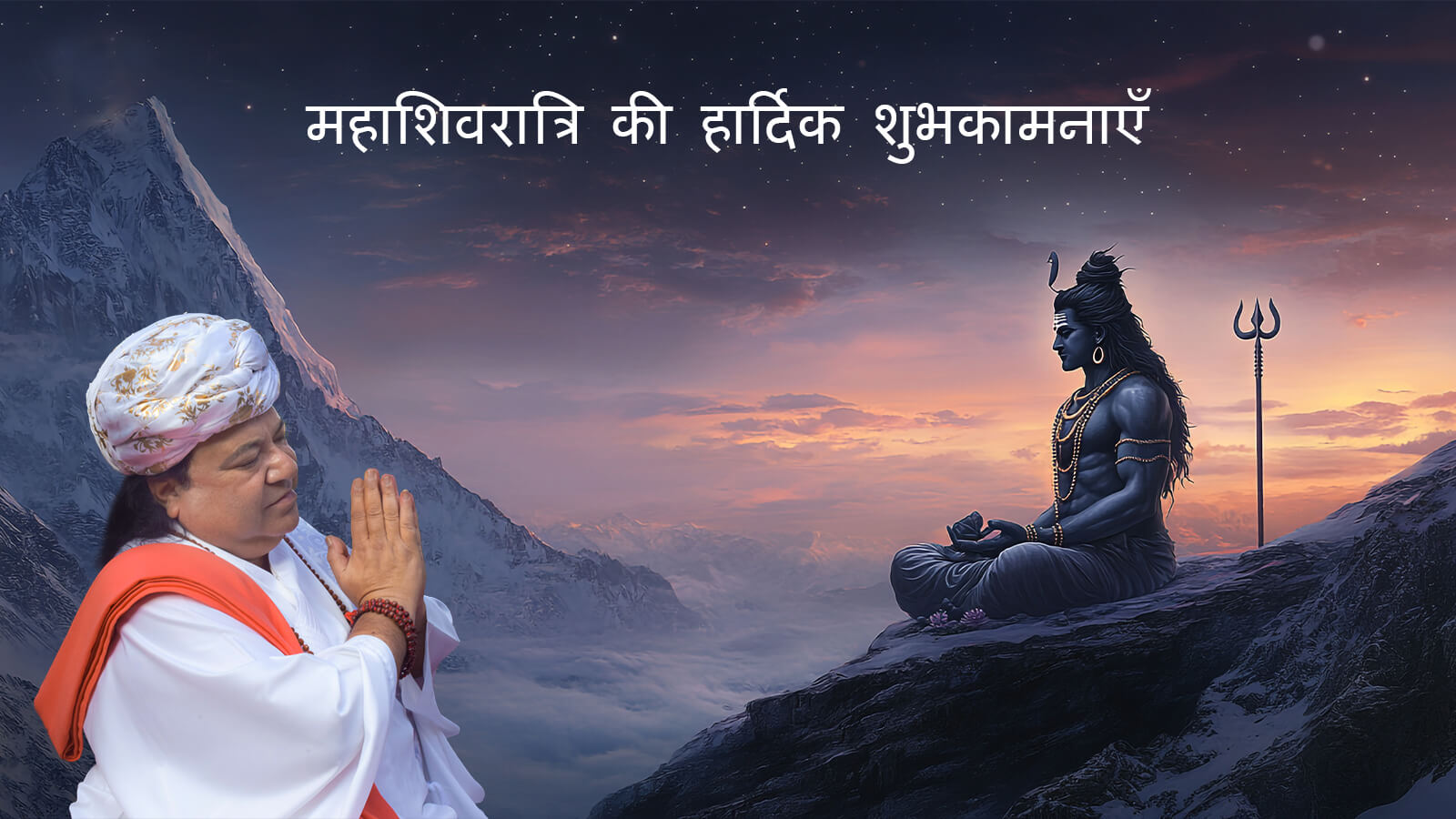
Maha Shivratri has never felt like a festival to me. It has always felt like a pause — a deep, intentional pause placed gently in the middle of existence. While the world continues its rhythm of desire, noise, ambition, and celebration, this night arrives asking for something entirely different. It does not ask me to decorate life. It asks me to observe it. Shivratri does not come with excitement or anticipation; it comes with gravity. A quiet weight that draws awareness inward, away from roles, responsibilities, and identities, toward something far more subtle and far more honest.
Over the years, I have realised that Shivratri is not meant to be understood intellectually. It is intended to be experienced existentially. This is the night where effort relaxes, where striving loosens its grip, and where the constant need to become something dissolves, even if only for a few moments. Shivratri reminds me that before all ambition, before all progress, before all becoming, there is simply being — unmoving, unclaimed, and untouched.
Shiva, in this sense, is not a god I worship. Shiva is a state I recognise. He represents the intelligence of stillness — the dimension of life that does not chase, does not fear, and does not negotiate with the world. While life moves in cycles of gain and loss, attachment and detachment, creation and destruction, Shiva remains seated in awareness. He does not intervene; he witnesses. And in that witnessing, transformation happens naturally, without force.
This is why Shivratri is sacred. It is the night when the architecture of existence itself supports inward movement. The body becomes more receptive, the mind slightly less restless, and the inner noise a little easier to step back from. Ancient seekers understood this not as belief but as observation. They noticed that on this night, sitting upright in silence felt less burdensome, more natural. Not because the mind suddenly became disciplined, but because the environment itself assisted awareness.
To stay awake on Maha Shivratri is not an act of endurance. It is a symbolic refusal to slip back into unconsciousness. Sleep, here, represents habitual living — drifting through life guided by patterns, impulses, and unexamined reactions. Wakefulness represents choice. Presence. Responsibility toward one’s own awareness. When I stay awake on this night, I am not resisting sleep; I am choosing consciousness.
Shiva has always unsettled the human tendency to accumulate — identities, achievements, relationships, even spirituality. He sits covered in ash, reminding us that everything we are proud of will eventually dissolve. Not to induce fear, but to invite freedom. Ash is what remains after fire has consumed all forms. It is neutral. It does not cling. It does not demand. Shiva wears ash because he has nothing left to prove.
Destruction, in Shiva’s language, is deeply misunderstood. It is not violent; it is compassionate. It is the destruction of illusion, of false continuity, of attachments that silently exhaust us. Every time life takes something away from us, we experience it as a loss because we resist the impermanence inherent in existence. Shiva does not resist. He cooperates with reality as it is. This is why he is called the great destroyer — not because he destroys life, but because he dissolves what prevents us from living truthfully.
The Shivling, often misunderstood as a symbol, is in fact a profound reminder of balance. It represents the union of stillness and movement, consciousness and creation. The base signifies Shakti — energy, life, expression — while the upward form signifies Shiva — awareness, stability, witness. Suffering arises when movement forgets stillness, when life becomes all doing and no being. Shivratri exists to restore that memory.
Silence, on this night, becomes the highest offering. Not silence as suppression, but silence as intimacy with oneself. Words tend to decorate truth or distort it. Silence allows truth to surface without interference. When I sit silently on Shivratri, I am not waiting for answers. I am allowing clarity to emerge on its own terms. This silence is not empty. It is densely alive.
The story of Shiva drinking poison during the churning of the ocean has always spoken to me deeply. Life inevitably produces poison — disappointment, grief, injustice, uncertainty. Most of us either numb ourselves to it or pass it on to others. Shiva does neither. He holds it consciously, neither swallowing nor rejecting it. This, to me, is the essence of maturity—the capacity to hold discomfort without allowing it to harden the heart or distort perception.
Maha Shivratri invites me to ask uncomfortable questions. What am I avoiding sitting with? What discomfort am I trying to escape through distraction? What part of myself am I unwilling to meet in silence? Awareness does not remove pain, but it prevents pain from becoming poison. When pain is witnessed fully, it loses its power to dominate consciousness.
Living Dwij does not encourage ritual for the sake of tradition. It encourages alignment. On Shivratri, alignment means simplifying and reducing stimulation and turning inward and sitting with the breath not as a technique, but as companionship. Observing the mind not to control it, but to understand it. Letting go, even temporarily, of the idea that life needs to be fixed.
You do not need elaborate practices to honour this night. Sincerity is enough. Sit upright. Breathe consciously. Stay awake as long as awareness allows. Place one unnecessary burden down — a resentment, a self-image, a fear. Let it rest there. Shiva does not demand devotion. He responds to honesty.
Maha Shivratri does not ask whether you believe in Shiva. It asks whether you can remain present without distraction, whether you can stay with yourself without running, and whether you can allow stillness to reorganise you from within. Even a few minutes of genuine presence on this night can shift something fundamental.
This night, bathed in the soft glow of the stars, does not promise grand miracles or dramatic transformations. Instead, it offers something far more profound: clarity. This clarity, when embraced with an open heart and sincere mind, has the power to gently shift the course of a life. It is not a loud, sweeping change, but a quiet revelation that seeps into the soul, reshaping thoughts and decisions in ways that can last a lifetime. Sometimes, it is in these moments of clarity that we find the strength to let go of old patterns and begin anew, creating a path that aligns with our true selves.
On this blessed occasion of Maha Shivratri, may you rediscover the profound essence of what you have always possessed but may have overlooked. May the stillness of this sacred night remind you that within you lies a complete and unbroken spirit, untouched by the chaos of the outside world. May the silence enveloping you unveil the profound truths and insights that relentless striving and effort have often obscured, guiding you toward a deeper understanding of your true self and the universe around you.
— Param Dwij, for Living Dwij